What Is E6013 Welding Electrode? A Complete Guide for Pakistan’s Welders
Everything you need to know about AWS E6013 electrodes — classification code breakdown, comparison with E7018/E6011, size & amperage charts, and tips for Pakistan welders.
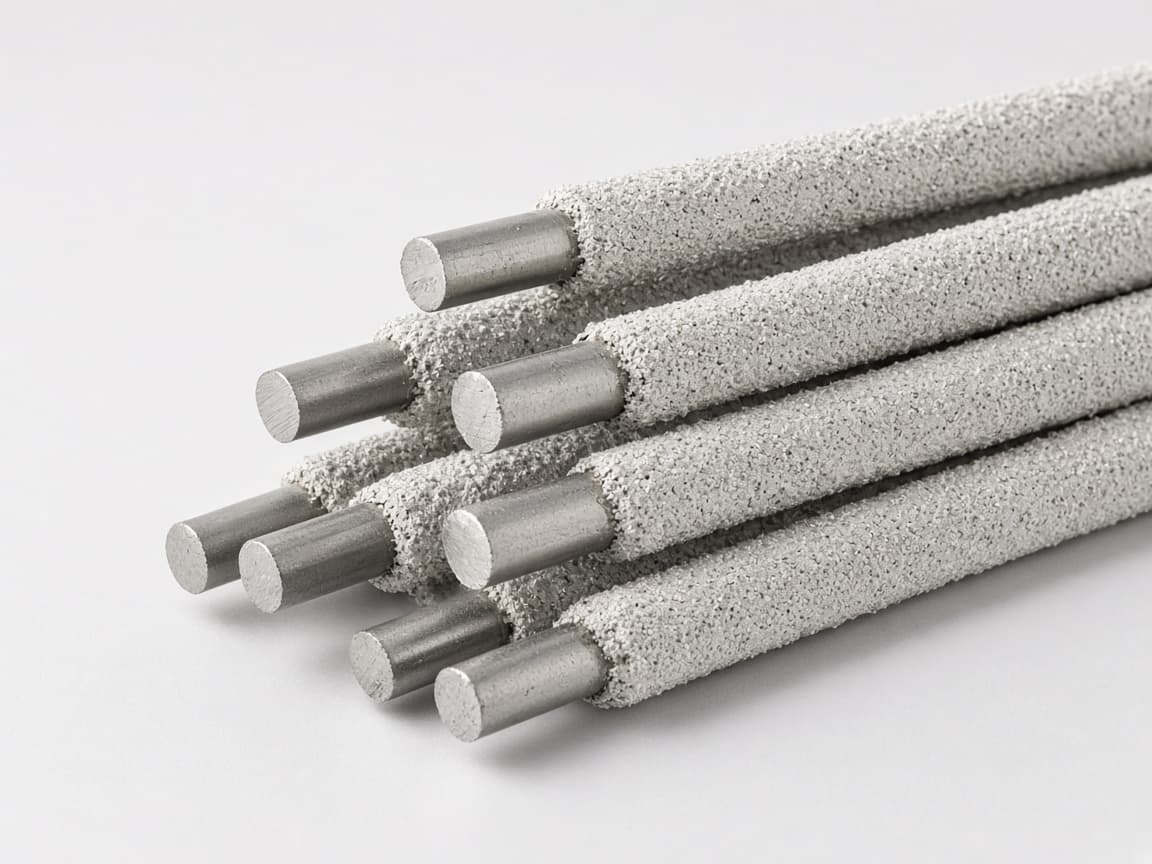
Direct Answer for Welders & Contractors
Why Is E6013 the Most Popular Electrode in Pakistan?
Whether you are a steel fabricator in Badami Bagh Lahore, a project contractor in Clifton Karachi, or a metal workshop technician in Peshawar, E6013 is the primary electrode used for mild steel welding. The reasons for its dominant market share include:
- Effortless Arc Initiation and Restriking: The high-titania (rutile) flux coating conducts electricity readily, minimizing electrode sticking on cold steel.
- Smooth, Low-Spatter Arc: Produces fine droplets across the arc gap, keeping the surrounding steel clean and reducing post-weld grinding labour.
- Self-Releasing Slag: The friable slag peels away smoothly with minimal chipping, leaving a visually appealing, finely rippled weld bead.
- Versatile Power Supply Compatibility: Performs reliably on standard single-phase 220V oil-cooled welding transformers, portable inverters, and heavy-duty 3-phase DC rectifiers.
- All-Position Flexibility: Enables welders to execute sound welds in flat, horizontal, vertical-up, and overhead orientations.
What Does the AWS E6013 Classification Code Mean?
The American Welding Society (AWS A5.1) classification system uses a standardized alphanumeric designation:
- E (Electrode): Identifies a covered flux-shielded metal arc welding (SMAW / MMAW) consumable.
- 60 (Tensile Strength): Indicates a minimum deposited weld metal tensile strength of 60,000 pounds per square inch (approx. 430 MPa), matching the strength of standard mild steel and structural hollow sections (HHS).
- 1 (Welding Position): Certifies all-position usability: Flat, Horizontal, Vertical-Up, and Overhead.
- 3 (Coating & Current Type): Specifies a rutile-potassium flux coating operating smoothly on AC, DCEN (DC Straight), or DCEP (DC Reverse).
E6013 vs Other Common Welding Electrode Grades
Understanding how E6013 compares to other popular stick electrode classifications helps contractors select the right product for specific project codes:
| AWS Grade | Coating Type | Current Type | Best Applications | Key Performance Feature |
|---|---|---|---|---|
| E6013 | Rutile (High Titania) | AC / DC (±) | General fabrication, gates, structural steel, sheet metal, repairs | Extremely smooth arc, easy restrike, clean finish, shallow-to-medium penetration |
| E6011 | Cellulosic Potassium | AC / DCEP | Pipe welding, dirty/rusty steel, agricultural equipment | Deep penetrating arc, fast-freezing puddle, handles mill scale |
| E7018 | Low-Hydrogen Iron Powder | DCEP / AC | High-strength structural steel, boilers, pressure vessels, bridges | Crack-resistant, high impact toughness, 70,000 psi tensile strength |
| E6010 | Cellulosic Sodium | DCEP only | Cross-country pipeline root passes, heavy tanks | Forceful penetrating arc, rapid freeze; requires DC generator/inverter |
Diameter, Amperage Range & Material Thickness Guide
Setting the correct welding current is crucial to prevent burn-through on thin metal or lack of fusion on thick plate:
| Diameter | Length | Recommended Amperage | Base Material Thickness | Primary Applications |
|---|---|---|---|---|
| 2.5 mm (3/32") | 300 mm | 60 – 90 A | 1.2 mm – 3.0 mm | Thin sheet metal, square tubing, decorative grills, bodywork |
| 3.2 mm (1/8") | 350 mm | 90 – 130 A | 3.0 mm – 8.0 mm | General fabrication, structural I-beams, trusses, angles, channels |
| 4.0 mm (5/32") | 400 mm | 130 – 180 A | 6.0 mm – 16.0 mm | Heavy plate fabrication, machinery bases, trailer beds, column splices |
| 5.0 mm (3/16") | 400 mm | 180 – 240 A | 12.0 mm and above | Heavy multi-pass industrial welding, massive structural sections |
Note: For vertical-up and overhead welding, reduce operating current by 10% to 15% compared to flat position welding to maintain puddle control.
What Separates a High-Quality E6013 Electrode from Low-Grade Rods?
- Core Wire Purity: Premium electrodes utilize high-purity, low-carbon imported wire rod with strictly controlled sulfur and phosphorus levels to prevent hot cracking.
- Coating Concentricity: Precision extrusion ensures the flux coating has uniform thickness around the core wire, preventing the arc from "fingernailing" or wandering to one side.
- Moisture-Resistant Flux Formulation: Advanced binders minimize atmospheric moisture absorption, safeguarding against porosity.
- Certified Quality Management: Manufacturing under an ISO 9001:2015 quality system with batch testing guarantees that every box performs identically.
Perfect Bridge & Perfect King E6013 Electrodes
Perfect Craft (Pvt.) Ltd. manufactures Pakistan's premier E6013 welding electrodes:
1. Perfect Bridge (AWS E6013) - **Tagline:** *"Jahan Perfect Mazbooti, wahan tanka Perfect Bridge ka"* - **Target Buyer:** General fabricators, construction contractors, workshops, and maintenance teams. - **Strengths:** Rapid arc strike, smooth weld bead appearance, minimal spatter.
2. Perfect King (AWS E6013) - **Tagline:** *"Is ka koi Torr nhi… Is jaisa koi Jorr nhi…"* - **Target Buyer:** Heavy industrial fabricators, structural engineering projects, and heavy equipment repair. - **Strengths:** Robust arc stability, deep root fusion, consistent multi-pass performance.
Frequently Asked Questions (FAQ)
Can I run E6013 on an AC transformer machine? Yes. E6013 electrodes are formulated with potassium compounds in the flux that stabilize the alternating current zero-crossing point, making them ideal for single-phase 220V AC welding machines.
Should E6013 electrodes be baked before use? E6013 electrodes require a small amount of residual moisture (typically 1.5% to 3.0%) in their rutile coating to operate properly. **Never bake E6013 at high temperatures like low-hydrogen E7018.** If rods have been exposed to damp air, re-dry gently at 100°C–120°C for 30–60 minutes.
What is the difference between DC+ and DC- with E6013? - **DCEN (DC Straight / Electrode Negative):** Produces shallower penetration, faster burn-off rate, and is ideal for thin sheet metal to avoid burn-through. - **DCEP (DC Reverse / Electrode Positive):** Delivers deeper penetration and a slightly wider bead profile on thicker steel sections.
Technical Resources & Inquiries
Share this technical resource
Published by Perfect Craft (Pvt.) Ltd., Karachi, Pakistan. For questions or technical verification, reach our engineering desk at [email protected].
Next step
Request current technical documents, check dealer availability, or ask about bulk supply. Every form submission returns a reference ID for follow-up.