

How to Store and Dry Welding Electrodes in Pakistan's Climate
Manufacturer guide to storing and re-drying welding electrodes in Pakistan. Moisture protection protocols for coastal Karachi and monsoon humidity, oven baking instructions for E6013, and binding wire storage.
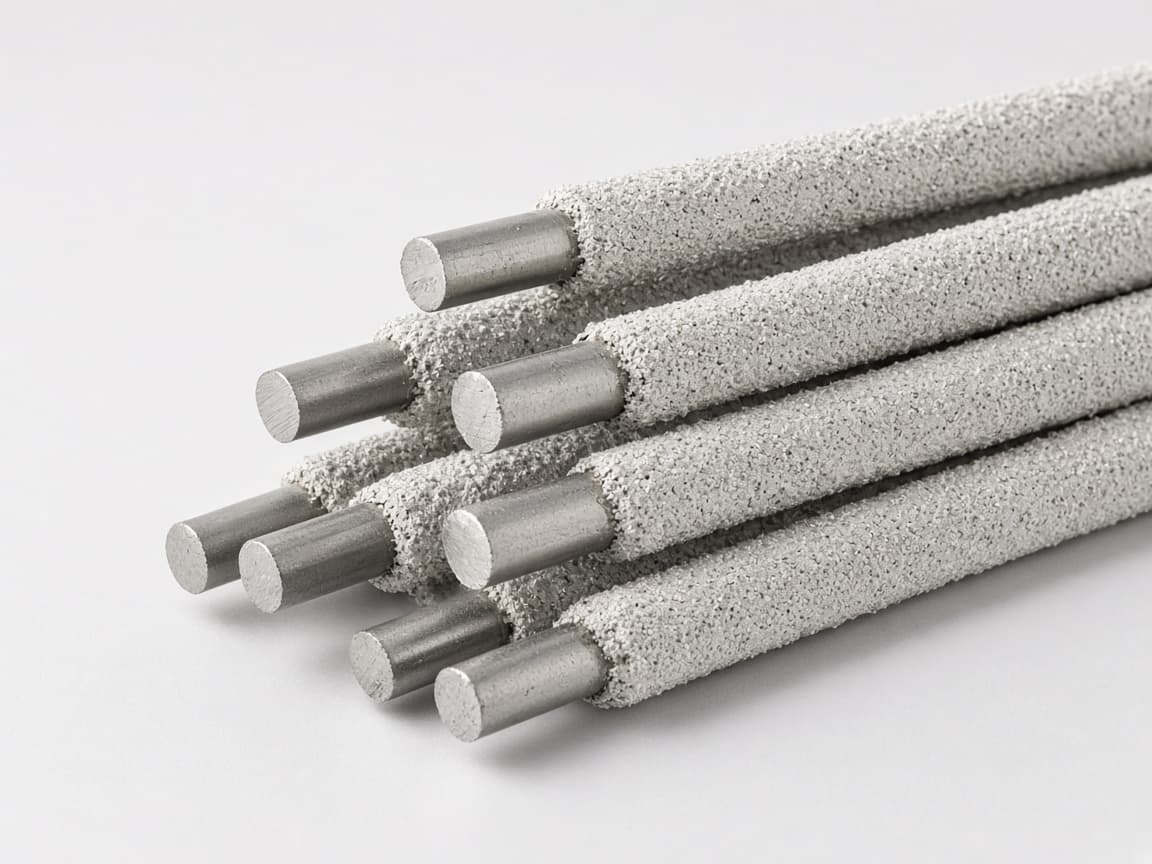
Direct Answer for Welders & Site In-Charges
Why Climate and Moisture Control Matter in Pakistan
Pakistan experiences extreme climatic variations that directly impact welding consumable shelf-life: 1. Coastal Region (Karachi, Gwadar, Port Qasim): Relative humidity frequently exceeds 75% to 85% year-round, saturated with marine airborne chlorides. Electrodes stored improperly absorb ambient moisture within 48 to 72 hours of breaking the outer plastic wrap. 2. Monsoon Plains (Lahore, Gujranwala, Faisalabad, Rawalpindi, Peshawar): During July, August, and September, monsoon rains cause sudden spikes in indoor warehouse humidity, turning hygroscopic flux coatings soft or crumbly. 3. Arid Regions (Quetta, Multan, Sukkur): Dust and fine silt can contaminate flux coatings if boxes are stored uncovered, leading to slag inclusions and arc wander during welding.
What Happens When Welding Electrodes Absorb Moisture?
When a welder strikes an arc using a damp or water-compromised electrode, several defect mechanisms occur immediately:
- Erratic Arc Wander & "Fingernailing": Moisture causes the flux coating to burn unevenly on one side, exposing the core wire and creating an eccentric arc that is difficult to direct.
- Excessive Spatter & Harsh Crackling Arc: Trapped water vapor boils explosively in the intense 6,000°C arc plasma, blowing molten metal droplets across the workpiece.
- Pinhole Porosity & Wormholes: Escaping steam becomes trapped inside the rapidly freezing weld pool, appearing as internal voids or surface pinholes upon slag removal.
- Slag Adhesion: Slag that should peel away effortlessly becomes glassy, brittle, and fuses tightly into toe grooves, requiring laborious chisel grinding.
Manufacturer Storage Best Practices for Pakistani Warehouses & Workshops
Follow these four core rules to maintain factory-fresh performance:
``
┌─────────────────────────────────────────────────────────────┐
│               RECOMMENDED STORAGE CHECKLIST                 │
├─────────────────────────────────────────────────────────────┤
│  ✓ Elevated Pallets:  Min. 100 mm off bare concrete floor   │
│  ✓ Wall Clearance:    Min. 150 mm gap from exterior walls   │
│  ✓ Warehouse Temp:    15°C – 30°C (avoid extreme swings)    │
│  ✓ Humidity (RH):     Maintained below 60%                  │
│  ✓ Inventory Rule:    FIFO (First In, First Out) rotation   │
│  ✓ Packaging Seal:    Do NOT break poly-wrap until needed   │
└─────────────────────────────────────────────────────────────┘
``
- Keep Off Concrete Floors: Bare concrete floors continuously sweat moisture through capillary action, particularly during rainy seasons. Always store master cartons on wooden or plastic pallets.
- Preserve the Moisture Barrier: Genuine Perfect Bridge and Perfect King electrodes are enclosed in heat-sealed polyethylene inner pouches within each cardboard box. Instruct storekeepers never to slit open poly-bags until the welder is actively ready to load the rods into their holder.
- Control Air Circulation: Avoid storing electrodes near open bay doors, exhaust steam pipes, cooling towers, or washroom partitions.
Re-Drying Protocol: How to Correctly Bake E6013 Electrodes
There is widespread misinformation in Pakistani fabrication yards where welders mistakenly place all electrode types into high-temperature 350°C rod ovens.
The Critical Rule for Rutile E6013 Electrodes: Unlike basic low-hydrogen electrodes (such as AWS E7018) which must be baked at 300°C–350°C to eliminate every trace of hydrogen, **E6013 rutile flux relies on a balanced 3%–5% chemically bound moisture level to produce its signature smooth, quiet arc and gas shield**.
| Electrode Grade | Coating Chemistry | Normal Oven Temp | Baking Duration | High-Temp Warning |
|---|---|---|---|---|
| E6013 (Perfect Bridge / King) | High Titania (Rutile) | 100°C – 120°C | 30 to 60 minutes | NEVER bake above 150°C! Burns flux binders. |
| E7018 (Low-Hydrogen) | Basic Iron Powder | 300°C – 350°C | 60 to 120 minutes | Required to eliminate diffusible hydrogen. |
Step-by-Step E6013 Re-Drying Procedure: 1. **Inspect the Rods:** If electrodes show white salt efflorescence, loose crumbling flux, or rusted core wire tips, discard them immediately. 2. **Load Evenly:** Lay rods horizontally on wire mesh trays inside an electrically heated drying oven, no more than 3 layers deep to ensure uniform heat penetration. 3. **Set Temperature:** Adjust thermostat to **100°C to 120°C (212°F to 248°F)**. 4. **Hold Duration:** Bake for **30 to 60 minutes** depending on humidity levels. 5. **Cool Down:** Allow the rods to cool inside the closed oven to approximately 50°C before bringing them onto the welding floor.
Proper Storage for Perfect Binding Wire on Job Sites
In addition to welding electrodes, rebar binding wire requires systematic jobsite protection:
- Preventing Surface Rust: Perfect Binding Wire is dead-soft annealed mild steel. While a light natural oxide film does not impair rebar tying, heavy red flake rust reduces ductility and contaminates the concrete matrix.
- Cover Coils with Tarpaulins: When coils (5 kg, 10 kg, or 25 kg bundles) arrive on site in Karachi, Lahore, or Islamabad, keep them elevated on timber dunnage and covered with waterproof tarpaulins until the steel fixers (sarria-walay) are ready to tie.
- Avoid Contact with Mud & Rainwater: Never leave coils lying in pooling foundation water or muddy ground.
Frequently Asked Questions (FAQ)
Can I dry welding electrodes over an open flame, gas burner, or charcoal stove? **No.** Never expose welding electrodes to direct flame, brazing torches, or hot charcoal. Direct flame produces uneven local scorching that destroys the flux coating, oxidizes the core wire, and causes severe arc instability and brittle welds. Always use a temperature-controlled electric oven.
How can I tell if my E6013 welding electrodes are damp? Signs of damp E6013 electrodes include: excessive crackling and loud explosive pops during welding; spatter droplets sticking aggressively to surrounding metal; flux flaking off in chunks near the arc; and wormholes/porosity visible in the weld metal after chipping the slag.
Does Perfect Craft packaging protect against moisture in transit? Yes. Perfect Craft (Pvt.) Ltd. packages all **Perfect Bridge** and **Perfect King** electrodes with dual-layer moisture protection: individual moisture-barrier polyethylene shrink wrapping for each inner box, packed securely in robust 20 kg corrugated master shipping cartons.
Where can I obtain official technical data sheets and storage documentation? Download the verified [Perfect Bridge TDS](/downloads/tds/perfect-bridge-e6013-tds.pdf) or contact our Karachi sales desk at **(021) 32417795** / **[email protected]**.
Share this technical resource
Published by Perfect Craft (Pvt.) Ltd., Karachi, Pakistan. For questions or technical verification, reach our engineering desk at [email protected].
Next step
Request current technical documents, check dealer availability, or ask about bulk supply. Every form submission returns a reference ID for follow-up.