E6013 vs E7018 Welding Electrodes: What Is the Difference?
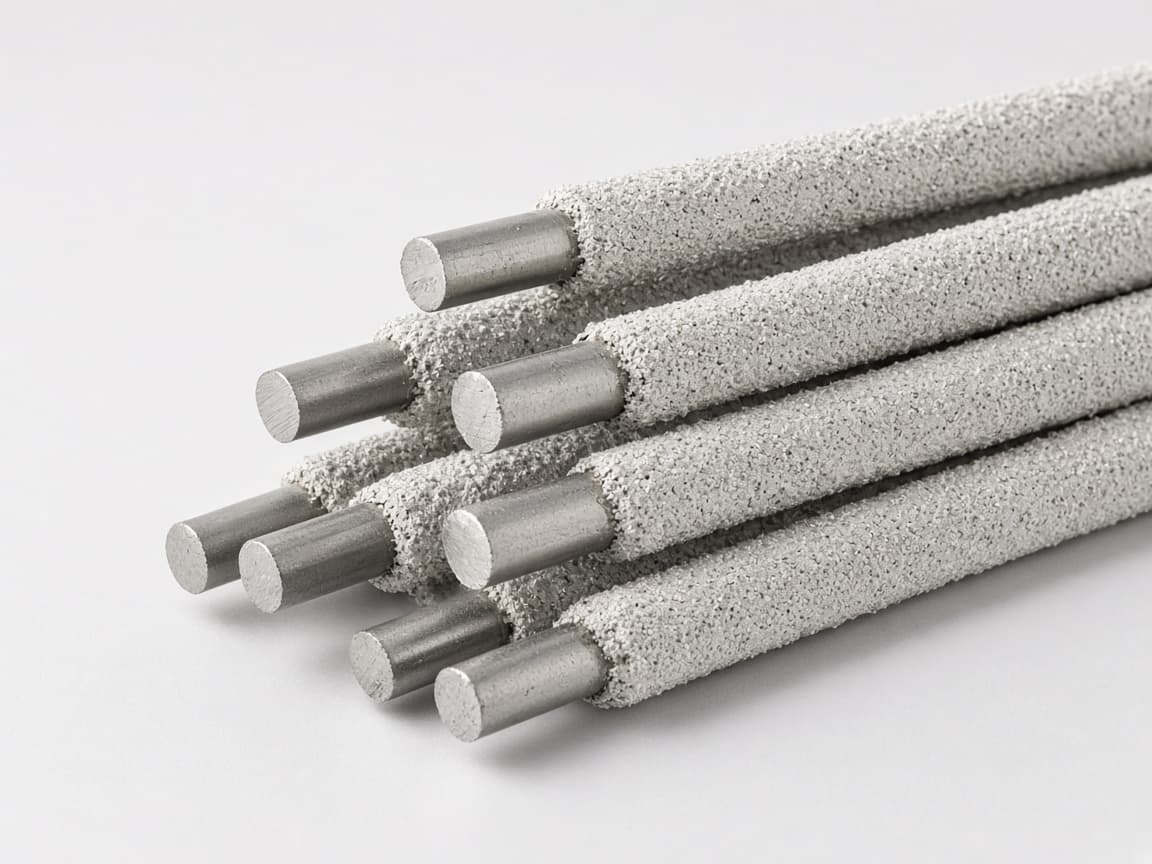
Detailed technical comparison between AWS E6013 rutile electrodes and E7018 low-hydrogen electrodes for Pakistan construction, steel fabrication, and structural engineering projects.
Direct Answer for Contractors & Steel Fabricators
Technical Comparison Master Table: E6013 vs E7018
The table below contrasts all metallurgical, electrical, and operational parameters between the two electrode classifications:
| Parameter | AWS A5.1 E6013 (Rutile) | AWS A5.1 E7018 (Low-Hydrogen) |
|---|---|---|
| Flux Coating Type | High Titania (Rutile) + Potassium compounds | Low-Hydrogen Basic + Iron Powder |
| Minimum Tensile Strength | 60,000 psi (~430 MPa) | 70,000 psi (~490 MPa) |
| Minimum Yield Strength | 48,000 psi (~330 MPa; typically ≥380 MPa) | 58,000 psi (~400 MPa) |
| Minimum Elongation | 17% (Perfect Bridge typically ≥22%) | 22% (typically 24–30%) |
| Charpy V-Notch Impact Toughness | Not specified by AWS (typically ≥47 J @ 0°C) | ≥27 J @ -29°C (-20°F) |
| Current & Polarity Compatibility | AC, DCEN (DC-), DCEP (DC+) | DCEP (DC+) primarily; specialized AC (OCV >70V) |
| Arc Characteristics | Soft, quiet, ultra-low spatter, easy restrike | Stiff, forceful arc, requires tight arc length |
| Penetration Depth | Shallow to medium | Medium to deep |
| Slag Detachability | Self-releasing, friable, effortless peeling | Heavy slag; requires manual chipping with hammer |
| Oven Baking & Storage | Normal room storage; re-dry @ 100–120°C only if damp | Mandatory holding oven @ 120–150°C; rebake @ 300–350°C |
| Vulnerability to Hydrogen Cracking | Prone if used on thick, high-restraint steel | Highly resistant (diffusible hydrogen <8 ml/100g) |
| Primary Project Use in Pakistan | General fabrication, RCC framing, gates, sheet metal | Heavy bridges, pressure vessels, high-rise moment frames |
1. Coating Chemistry & Mechanical Integrity
Why E6013 Excels in General Fabrication: E6013 uses a flux formulation rich in **titanium dioxide (TiO₂ / rutile)** blended with potassium silicate binders. This creates an easily ionizable arc column that ignites instantly even at lower open-circuit voltages. The deposited weld metal features a fine, smooth surface finish with negligible spatter, reducing grinding labour in workshops by up to 40%. It is ductile and fully adequate for standard commercial mild steels (A36, Grade 40/60 rebar framework, structural tubing).
Why E7018 Is Specified for Seismic & Critical Structural Work: E7018 flux is formulated from **calcium carbonate, calcium fluoride (fluorspar), and iron powder**. When melted, it generates a basic reducing slag that purifies the molten pool of sulfur and oxygen, producing weld metal with exceptionally high **notch toughness at sub-zero temperatures** and high resistance to dynamic fatigue. The iron powder in the flux increases deposition rates by 20% to 30% compared to conventional stick rods.
2. Power Supply & Polarity: What Pakistani Workshops Need to Know
A crucial difference on job sites across Pakistan is the power source available: - E6013 Works on Any Machine: In Pakistan, thousands of workshops still rely on single-phase 220V oil-cooled copper-wound transformers. E6013 runs smoothly on these machines because the potassium in the flux maintains arc ionization across the zero-voltage crossing of alternating current (AC). It also runs flawlessly on modern DC inverter welders on either straight (DC-) or reverse (DC+) polarity. - E7018 Demands DC Inverters or High-OCV Rectifiers: Running standard E7018 on an old single-phase transformer usually results in severe sticking, arc extinguishing, and erratic spatter. E7018 requires direct current electrode positive (DCEP / DC+) to achieve proper penetration and arc stability, requiring a capable industrial DC rectifier or modern 3-phase inverter machine.
3. Storage, Moisture Sensitivity & The "Baking Oven" Rule
This is the single most critical practical difference on Pakistani construction sites:
E6013 Handling: - E6013 rutile flux naturally contains **3% to 5% moisture**, which is chemically necessary to generate the protective hydrogen/carbon-dioxide shielding gas during burning. - **Warning:** Never place E6013 in high-temperature ovens (250°C–350°C)! Excessive heating destroys the organic binders in the rutile coating, leading to arc wander and porous welds. - If E6013 absorbs dampness during coastal monsoon periods in Karachi or humid Punjab summers, gentle redrying at **100°C to 120°C for 30 to 60 minutes** restores original performance.
E7018 Handling: - E7018 is a **low-hydrogen** consumable. If the coating absorbs atmospheric moisture, hydrogen dissociates into the molten weld pool, migrating into the heat-affected zone (HAZ) of high-strength steel and causing catastrophic **delayed underbead cracking** (hydrogen embrittlement). - Once an airtight tin of E7018 is opened, the rods must immediately be transferred to a **portable rod quiver / holding oven maintained at 120°C to 150°C** on the job site. If exposed to air for more than 4 hours, they must be rebaked in an industrial oven at **300°C to 350°C for 1 to 2 hours**.
4. Application Breakdown: When Should You Use Which?
| Application in Pakistan | Recommended Grade | Reason |
|---|---|---|
| Window Grills, Main Gates & Decorative Railings | E6013 (Perfect Bridge) | Low heat input prevents burn-through; smooth cosmetic finish; easy chipping. |
| Light Steel Trusses, Angles & Warehouse Purlins | E6013 (Perfect Bridge / King) | Excellent tensile match for mild steel; rapid welding in all orientations. |
| Heavy Pre-Engineered Building (PEB) Columns | E6013 (Perfect King) / E7018 | King provides deep root fusion on thick plate; consult engineer if low-hydrogen is mandated. |
| High-Rise Moment Connections & Highway Bridges | E7018 | Project engineering specifications strictly require certified low-hydrogen impact toughness. |
| Automotive Bodywork, Silencers & Sheet Metal | E6013 (Perfect Bridge 2.5 mm) | 12-number E6013 runs at 50–70A without blowing holes in thin metal. |
| Pressure Vessels & Heavy Industrial Tanks | E7018 | High radiographic soundness and crack resistance under hydrostatic pressure. |
Frequently Asked Questions (FAQ)
Can I substitute E6013 for E7018 on structural steel projects in Pakistan? Only if the structural engineer and project specifications permit. While E6013 delivers 60,000 psi tensile strength (fully sufficient for mild steel building frames), it does not provide the guaranteed low-hydrogen or sub-zero Charpy V-notch impact toughness required for fracture-critical seismic connections or heavy bridge girders. Always follow approved structural drawings.
Is E6013 stronger than E7018? No. E7018 has a minimum tensile strength of 70,000 psi (approx. 490 MPa), whereas E6013 has a minimum tensile strength of 60,000 psi (approx. 430 MPa). E7018 is stronger, but E6013 is substantially easier to operate, has cleaner arc characteristics, and does not require job-site heating ovens.
Does Perfect Craft manufacture E6013 welding electrodes in Pakistan? Yes. Perfect Craft (Pvt.) Ltd. is an established Karachi-based manufacturer of AWS E6013 electrodes under the **Perfect Bridge** (general construction) and **Perfect King** (heavy industrial) brand lines. Both brands are manufactured under an ISO 9001:2015 certified quality management system.
How can I request technical data sheets or a bulk quotation? You can download the verified [Perfect Bridge TDS](/downloads/tds/perfect-bridge-e6013-tds.pdf) and [Perfect King TDS](/downloads/tds/perfect-king-e6013-tds.pdf) directly, or submit a commercial inquiry via our [Quote Form](/quote/).
Share this technical resource
Published by Perfect Craft (Pvt.) Ltd., Karachi, Pakistan. For questions or technical verification, reach our engineering desk at [email protected].
Next step
Request current technical documents, check dealer availability, or ask about bulk supply. Every form submission returns a reference ID for follow-up.